You’ve been staring at the same spot on your cheek for weeks. The pimple is long gone, but something stayed, and you’ve already filed it under “scar.” Most of the time, that’s the wrong file. People lump every post-acne leftover together, then buy products meant for a different problem. Here’s how to tell acne marks from acne scars, how long each one lingers, and what’s actually worth doing.
How to Tell Acne Marks From Acne Scars
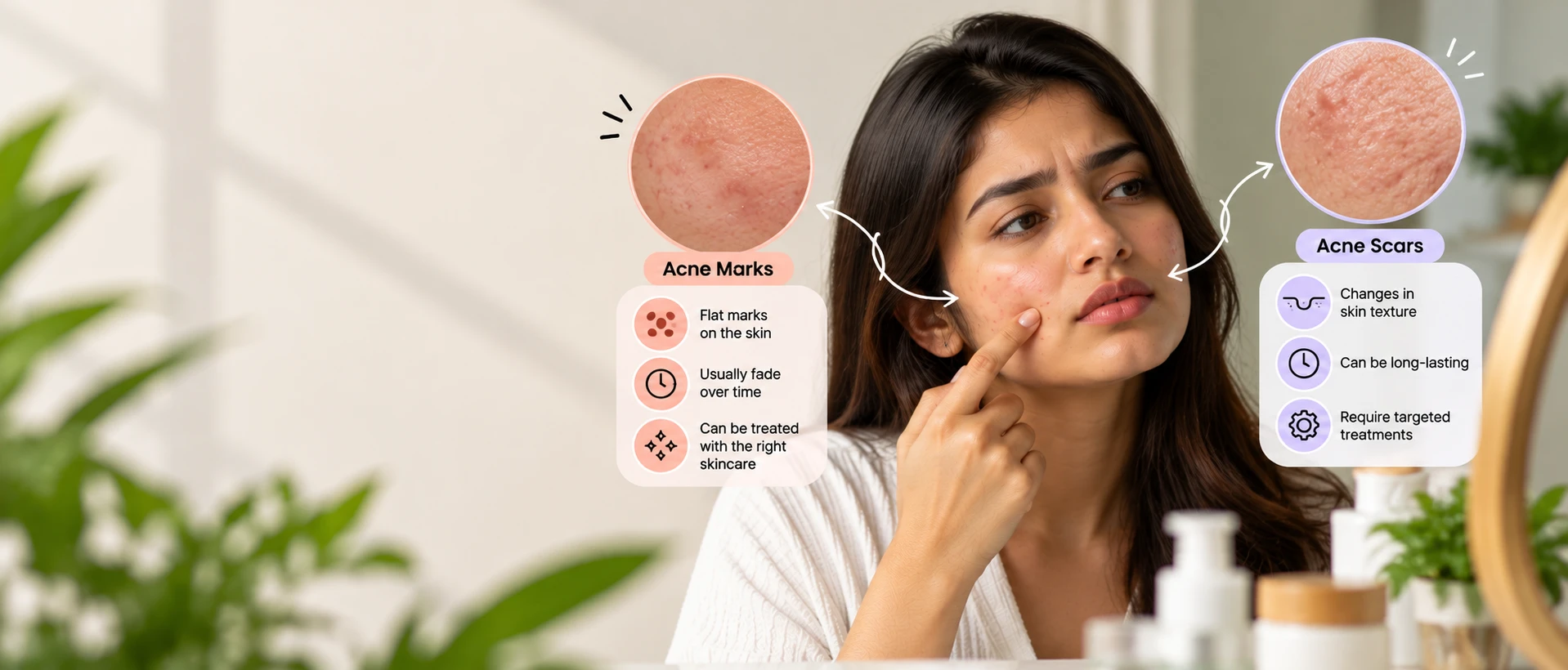
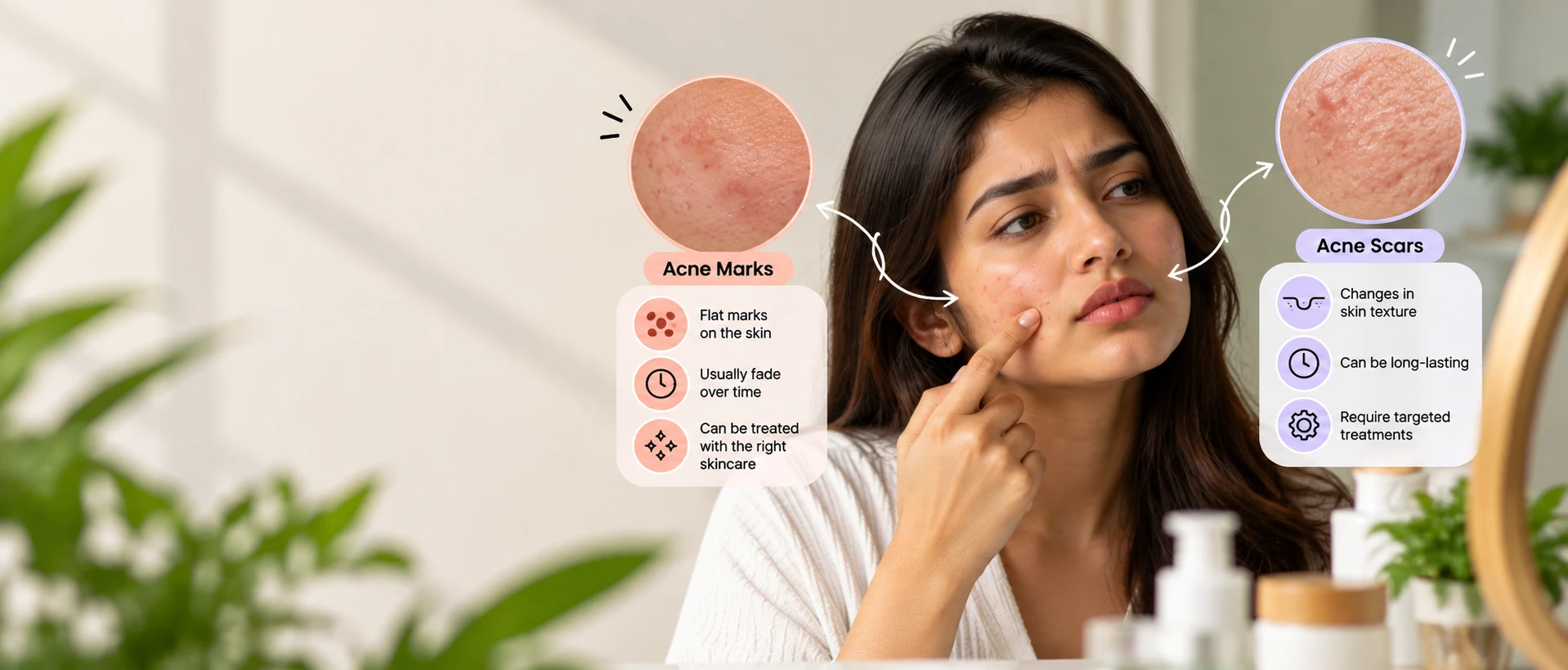
A mark is a change in colour. The skin itself is still smooth. After a pimple, inflamed skin can leave behind pink, red, brown or darker patches. The brown kind is called post-inflammatory hyperpigmentation, or PIH, which just means extra pigment left behind after inflammation.
A scar is a change in texture. Deep, painful breakouts can leave a depression in the skin or, less often, a raised area. Most people who scar end up with the sunken kind, which gives skin a rough, uneven look. Some discolouration usually sits around a new scar. The colour tends to fade with time. The scar stays.
The mistake is judging by colour alone. Try this instead: run a fingertip lightly over the spot, then look at it under side lighting. Flat means mark. A dip or a raised edge means scar. You can have both at once.
Acne Marks: Why They Linger and What Helps
Marks stick around because inflamed skin has produced extra pigment, and your skin clears it slowly. Weeks to months is a realistic timeline, and darker marks can take longer.
Two habits make it worse. Picking or squeezing re-inflames the area, which restarts the clock. Sun exposure is the other one, since UV can deepen pigmentation in a mark that’s already there.
So the fix is a little boring. Leave the spot alone, and wear sunscreen of SPF 30 or higher every day. Ingredients such as niacinamide, azelaic acid and vitamin C are commonly used to even out tone, but they work gradually, so give any routine a couple of months before judging it.
Now the myth. Lemon juice and baking soda do not fade marks. They’re harsh on skin, and irritated skin is exactly what leads to darker marks. Skip them.
This is also where prevention matters most. Fewer inflamed pimples means fewer marks. Acnestar Gel contains clindamycin and nicotinamide (another name for niacinamide) and is made for inflamed acne, so its job here is upstream, calming breakouts before they leave anything behind. Follow the directions on the pack.
Acne Scars: What’s Different Underneath
Scarring happens when a deep breakout damages the skin’s structure, including collagen, the protein that keeps skin firm and even. The skin heals, but not perfectly. Depressed scars are often described as icepick (narrow and deep), boxcar (wide with sharp edges) or rolling (gentle waves). Raised scars, including keloids, form when the skin builds too much tissue.
Are acne scars permanent? Not always visible forever, but they can fade without ever disappearing completely on their own. That’s the honest answer, and it’s why expecting a cream to fill a dent leads to frustration. Topical products can support healthy skin. They can’t rebuild lost tissue.
For scars that bother you, dermatologists can offer in-clinic options such as chemical peels, microneedling, laser treatment or fillers, chosen by scar type. If your scars are deep, widespread, raised, or not improving, that’s the right time to book a consultation.
Prevent Both: Treat Acne Early
You’re more likely to scar if you get deep, painful breakouts, if a close blood relative has acne scars, or if you pick and squeeze. Treating acne when it first shows up matters because mild acne is easier to calm before it goes deeper. Deeper breakouts are the ones more likely to scar.
A steady routine helps. Acnestar Face Wash is a gel cleanser for combination and oily skin that contains salicylic acid and glycolic acid. These two ingredients help clear oil and dead skin cells that clog pores. Washing twice a day as directed is enough. Scrubbing harder won’t speed anything up, and it tends to irritate skin that’s already inflamed.
The Bottom Line
Most of what acne leaves behind is a mark, and marks fade when you stop irritating them and start protecting them from the sun. True scars are a structural change, which is why they need professional options rather than another brightening product. The best strategy for both is the same: treat breakouts early and keep your hands off them.